
About Whyalla
Things to See and Do in Whyalla
Coming to Whyalla for a visit, or just after some more information about what our town has on offer? Keep reading to find out more, or visit the Whyalla Visitor Centre’s website for more information!

About the City of Whyalla
From the amazing marine wildlife to beautiful beaches and stunning sunsets, Whyalla has so much to offer its visitors. Known as the ‘steel city’ due to the massive steel works and shipbuilding heritage, Whyalla is the fourth largest city in South Australia with a population of just over 20,000 people.
The industrial and cultural history of Whyalla is accessible to visitors via several museums and public tours, including the Whyalla Maritime Museum which features various displays commemorating the town’s shipbuilding and mining history. You can also take a public tour of the Whyalla Steelworks and learn about the plant’s 100-year history.
More information is available from the Whyalla Visitors Centre.
Coast & Beach Experiences
If you are looking to experience the beauty of the Australian coast, then Whyalla is a great place to start. Our coastlines offer unique seascapes and coastal environments to marvel at and explore.
You can enjoy the sandy beaches at the foreshore and within the False Bay area, which extends from the Whyalla Steelworks in the south to Black Point in the east.
In the stunning Fitzgerald Bay area, take a walk alongside the stranded shingle beaches, an outstanding geographical feature that were formed over 7000 years ago.
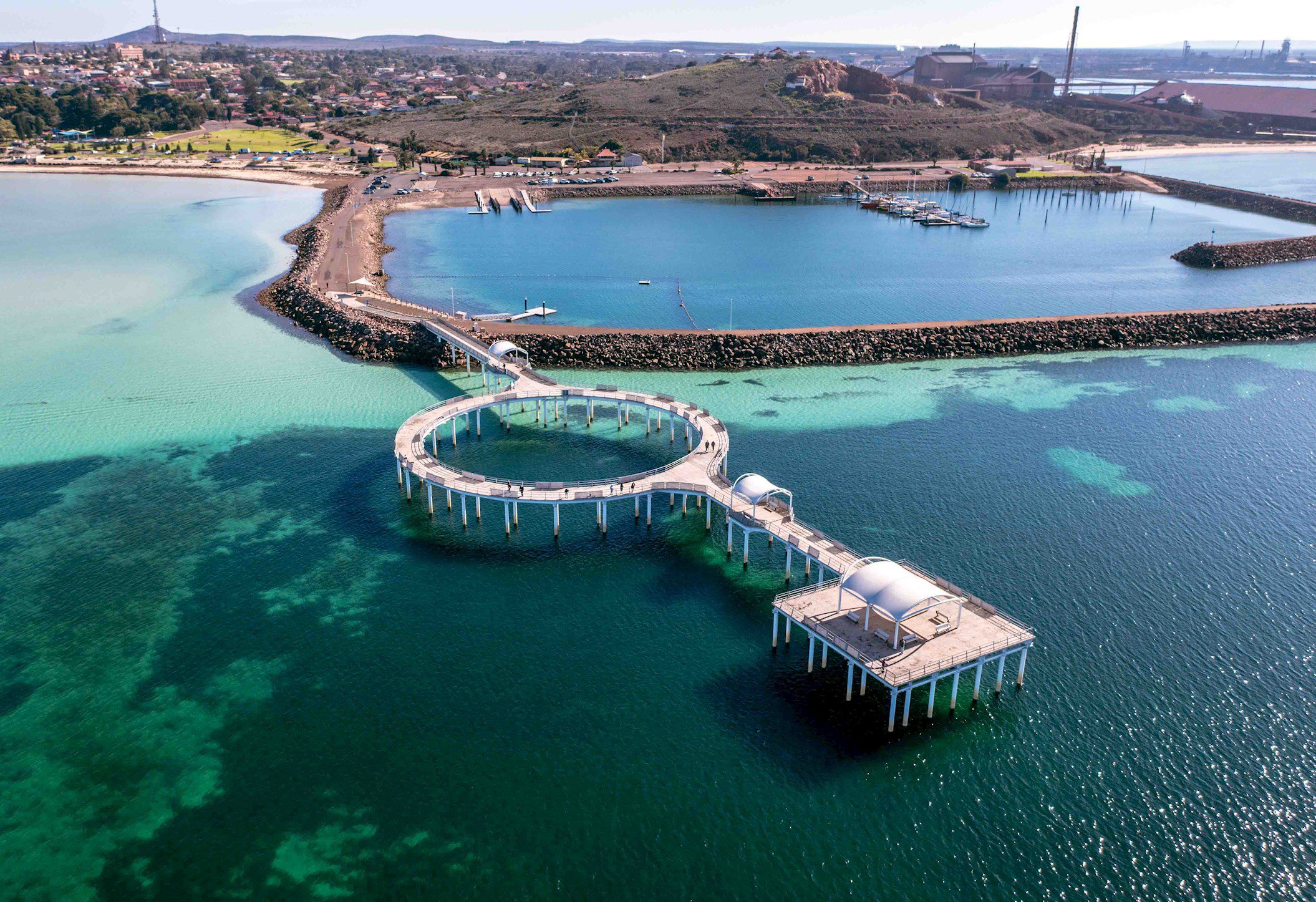
For avid fishers, the new Whyalla Jetty is the perfect spot to cast off from. Or, why not visit the marina to view the local dolphins frolicking in the water?

The Maritime Museum
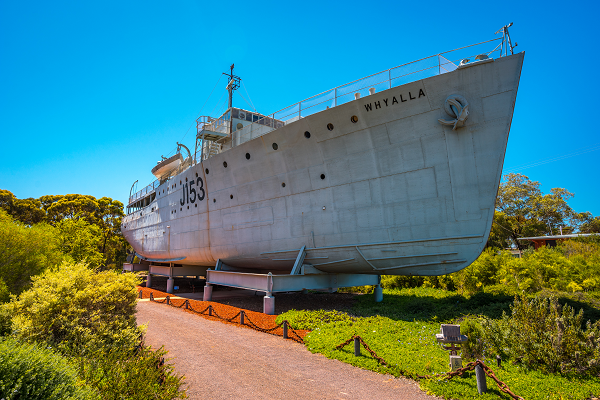
The Maritime Museum is home to a collection of artefacts and memorabilia. The World War II Gallery documents the story of the four wartime corvettes built in Whyalla: HMAS Whyalla, HMAS Pirie, HMAS Kalgoorlie and HMAS Gawler.
The BHP Shipbuilding Gallery showcases Whyalla’s shipbuilding era. The shipyards were open from 1940-1978. In that time, 66 vessels were built, including warships, carriers, tankers, ferries, container ships, barges and an oil rig.
The Natural History gallery features the Gulf’s diverse marine environment. Included is the 1814 edition of Matthew Flinders’ journals and charts, which demonstrate the early maritime heritage of the first European exploration of the upper Spencer Gulf.
The Singing to the Sharks exhibition explains the story of the Barngarla people, the traditional custodians of Whyalla, and their unique rituals connected to the sea.
The Museum is open daily, from 10am-4pm, except Good Friday and Christmas Day. For enquiries, contact the Whyalla Visitor Information Centre on +61 8 8645 7900 or toll-free on 1800 088 589
Fishing in Whyalla
Did you know that the Eyre Peninsula is well-known for its amazing array of seafood? Even better, you can catch some yourself. There’s no better way to finish off a fishing trip than to cook up your catch for dinner.
There are many options to choose from for your next fishing adventure. Fish off the Whyalla Foreshore Jetty to catch tommy ruff, garfish, whiting or squid. The Whyalla Foreshore Beach is a popular spot for crabbing, especially between spring and autumn. Along the rocky coastline there are numerous spots to catch salmon, garfish, tommy ruff and salmon. You can also head out in a boat to snare garfish, snook, tommy ruff, snapper and whiting.
You can find marinas and boat ramps along the Whyalla foreshore, as well as at Point Lowly.
